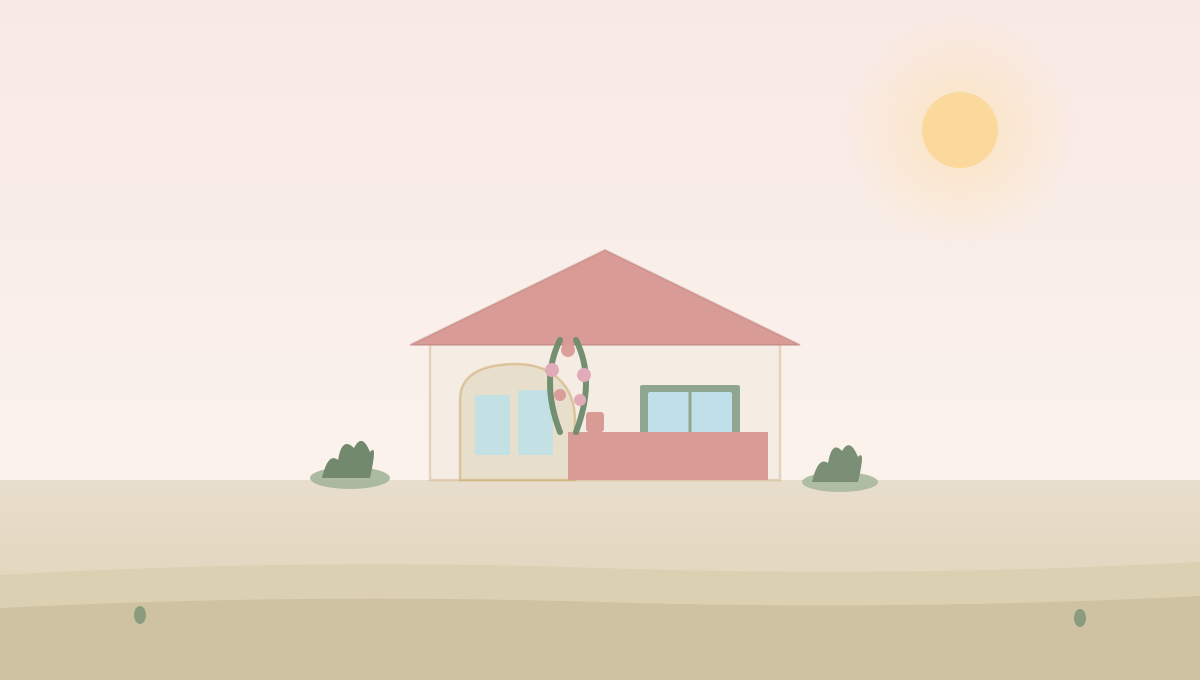
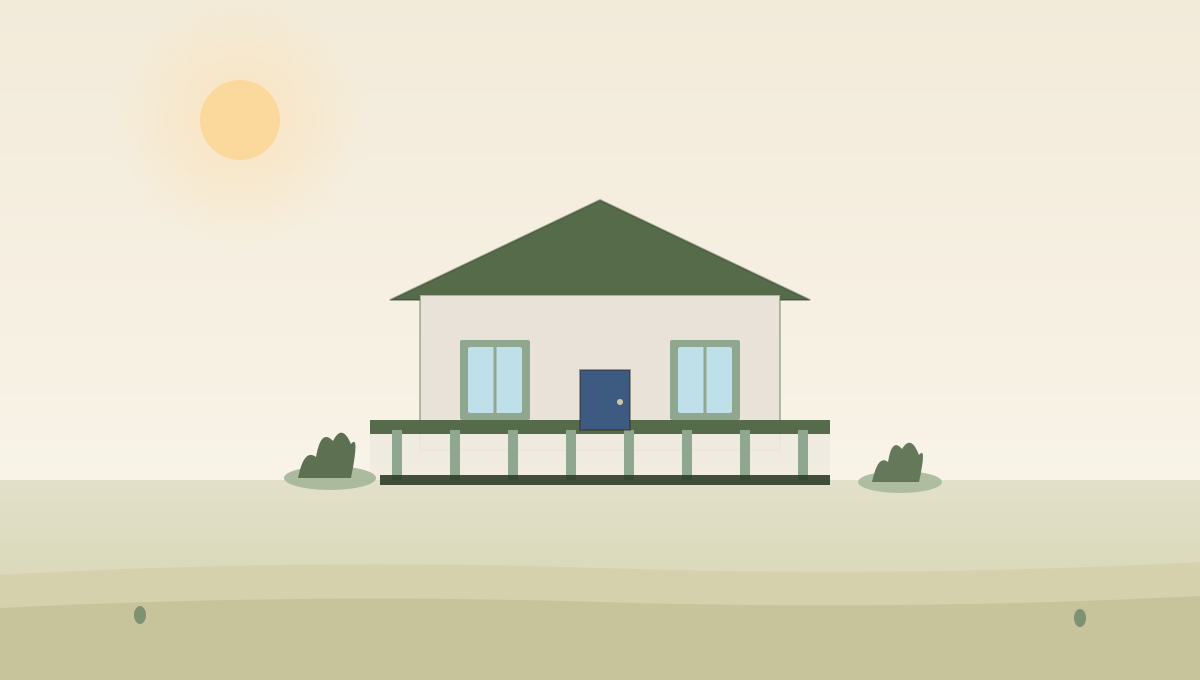
The Paralives curved wall house is one of the most-searched build types in the community for good reason — the curves break up the blocky look that straight-grid building tends to produce and give a house a character you'd expect from a high-end render, not a life sim. The trick is knowing which layout shape to use before you start placing walls.
"The shape of a wall is the first thing the camera sees. Get the curve right and everything else — furniture placement, color, lighting — becomes easier to resolve."
1. The Single-Curve Facade
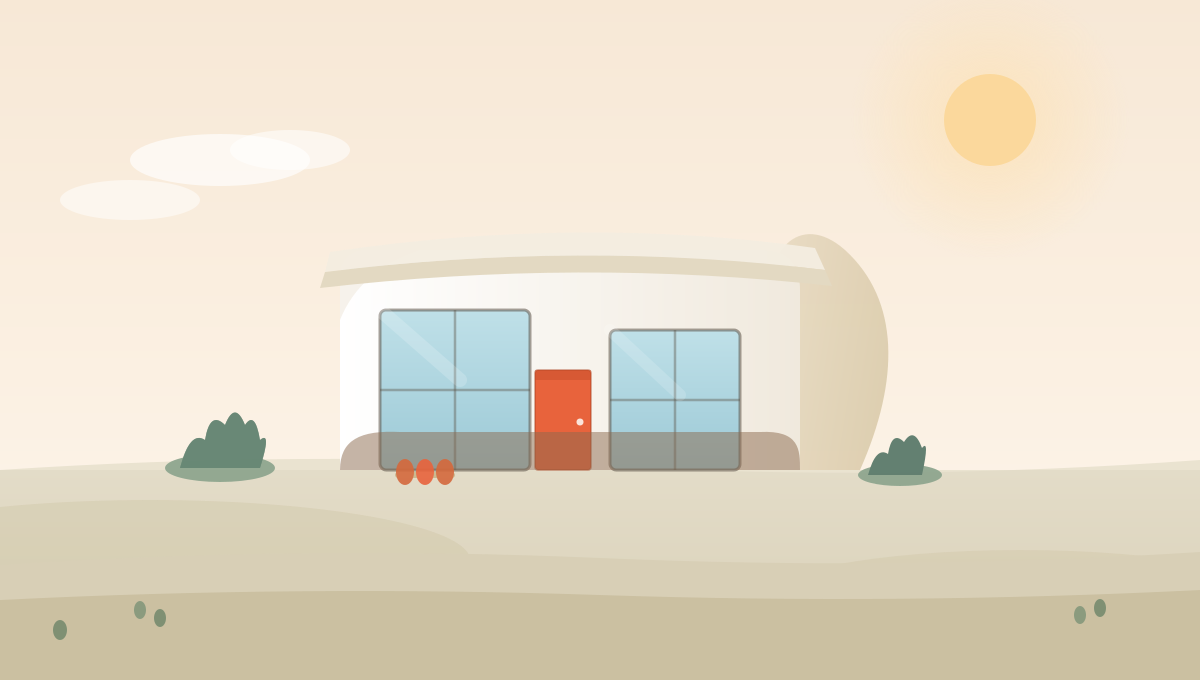
This is the easiest entry point into curved-wall Paralives building and the one used in our Curved Wall Modern Villa guide. The entire footprint stays on a standard rectangular grid. Only the front-facing wall is replaced with a gentle outward curve — you're changing one wall out of four, so the structure stays easy to roof and extend.
The key to making it work is keeping the curve subtle. A midpoint drag of about 1.5 to 2 tiles outward from a 12-tile-wide wall gives you a visible curve that still reads as an intentional design choice rather than an accident. Go further than 3 tiles and the interior becomes awkward to furnish.
- Best for: modern villas, minimalist builds, first curved-wall Paralives builds
- Difficulty: Intermediate
- Pairs well with: floor-to-ceiling windows along the curve
2. The Bow-Front Row House
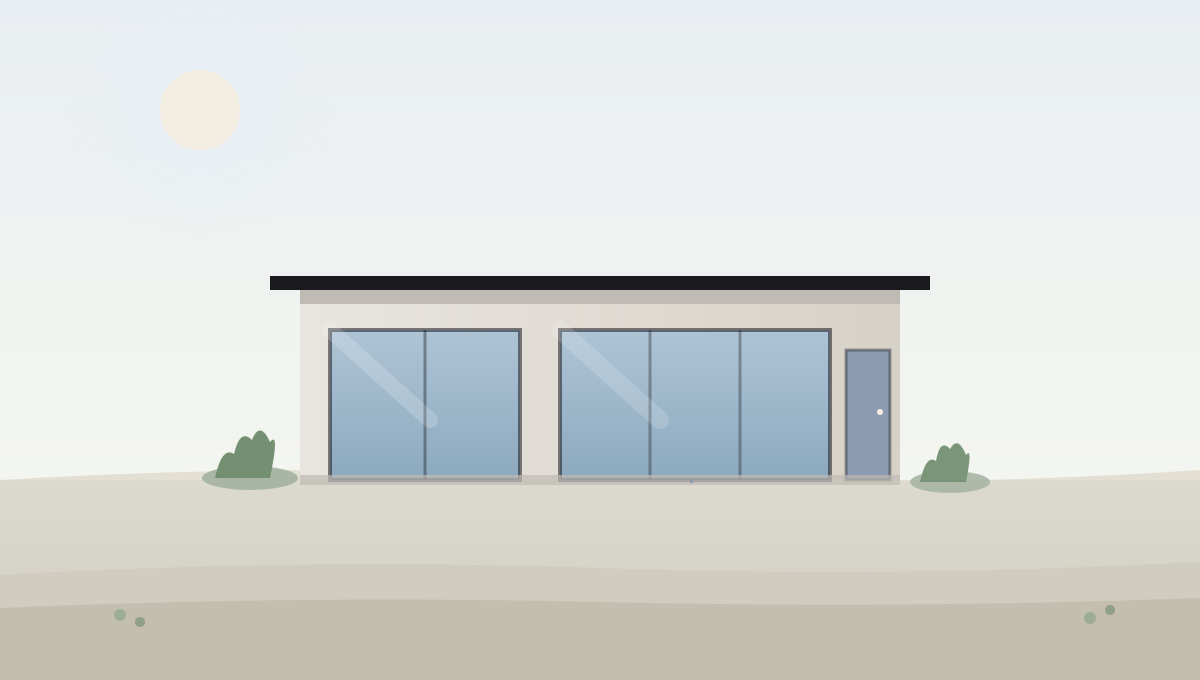
A traditional architectural feature where the front of the house bows outward as a multi-story curve, often used in Georgian terraces. In a Paralives build, you recreate this by stacking two single-curve walls at the same curve angle — one for the ground floor and one for the floor above — so the curved section appears to run the full height of the building.
The challenge here is keeping the curve angle identical on both floors. The easiest way is to note the exact tile coordinates of your ground floor curve midpoint before you switch to the first floor and repeat the drag from the same reference point. A Paralives no-grid build tip: use the snap-to-existing-wall feature to lock your upper wall to the lower one's anchor points.
- Best for: town homes, two-story modern builds, cozy bay window cottages
- Difficulty: Intermediate
- Pairs well with: deep sash windows along the bow
3. The Pinched Oval Footprint
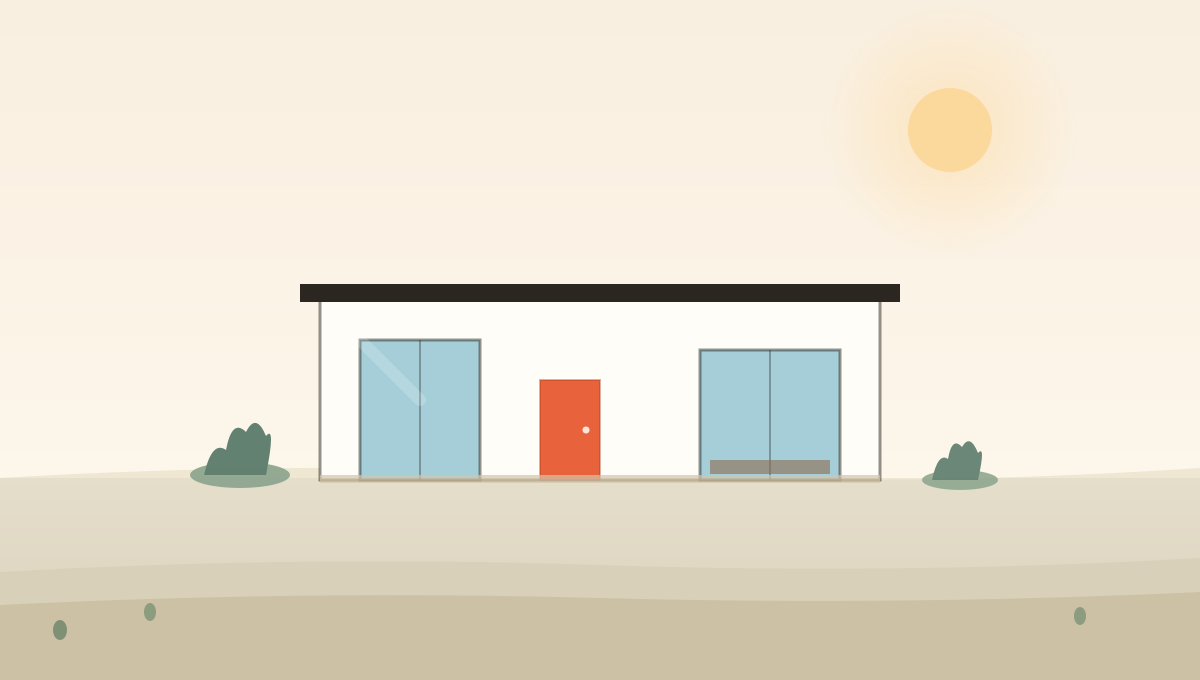
Instead of curving one wall of a rectangle, this layout uses no-grid building to draw an oval footprint from scratch — two long curved walls meeting at pointed ends. The result looks like a lens or an eye from above, and it's one of the most distinctive Paralives curved wall house shapes you can build.
Because the entire perimeter is curved, roofing becomes trickier. A flat roof with a slight overhang is the cleanest solution; domed or tapered roofs tend to fight the shape rather than sit naturally on it. Interior furniture placement is also more interesting — avoid square room dividers and instead use curved sofas or round tables to echo the wall shape.
- Best for: statement modern builds, designer homes, advanced Paralives builds
- Difficulty: Advanced
- Pairs well with: a monochrome Paralives color scheme to highlight the silhouette
4. The Curved Connector Wing
Rather than curving an exterior-facing wall, this technique uses a curved wall as the internal connector between two rectangular wings. The curved section becomes a hall, a covered walkway, or a glass link — and from the outside, the curve is visible as a glazed or solid arc between two blocky wings.
This is the most naturally functional of all the curved-wall Paralives layouts because the curved connector solves a real layout problem: how to join two off-axis wings at an angle. It also gives you more interior space to work with than trying to shoehorn furniture into a fully curved room.
- Best for: L-shaped builds, multi-wing layouts, courtyard-adjacent homes
- Difficulty: Intermediate to Advanced
- Pairs well with: glazed arc walls and a sage or blueprint color accent
5. The Full Courtyard Ring
The most ambitious curved-wall Paralives build on this list: a fully closed ring of curved walls surrounding a central open courtyard. You build the outer perimeter as a large oval, then cut the inner edge away and use a second, smaller oval inside to define the courtyard boundary.
This layout is featured in our Courtyard Loop House guide in the Modern Builds section. It's rated Advanced mainly because of the inner-wall trim work and the way the roofline has to accommodate the curved inner edge. But the spatial result — rooms arranged around a central sky-lit garden — is unlike anything you can build on a standard grid.
- Best for: villa-style homes, large lots, experienced Paralives builders
- Difficulty: Advanced
- Pairs well with: terracotta or sand Paralives color scheme and low ornamental planting in the courtyard
Choosing the right curved wall Paralives build for your skill level
If this is your first time using no-grid building in Paralives, start with the single-curve facade (layout 1). It changes the fewest walls from what you'd build on a standard grid, so the structure stays manageable and you can focus entirely on getting the curve shape right before adding complexity.
The curved connector wing (layout 4) is a useful next step because it puts the curve in a structurally clear role — connecting two things — rather than asking you to build an entirely curved room. Once you're comfortable with that, the courtyard ring (layout 5) becomes a natural progression.
Whichever layout you go with, pair it with a matching Paralives color scheme from our color guide before you start building, and every individual step in the construction will feel more intentional rather than figured-out-as-you-go.